Best Ackee Alternative

Love Ackee's privacy-first approach and self-hosting simplicity? Helion adds product analytics capabilities - funnels, cohorts, retention, and user identification - with a modern architecture built for scale.

  • Open-source
  • Privacy-first
  • Product Analytics
  • Self-hostable
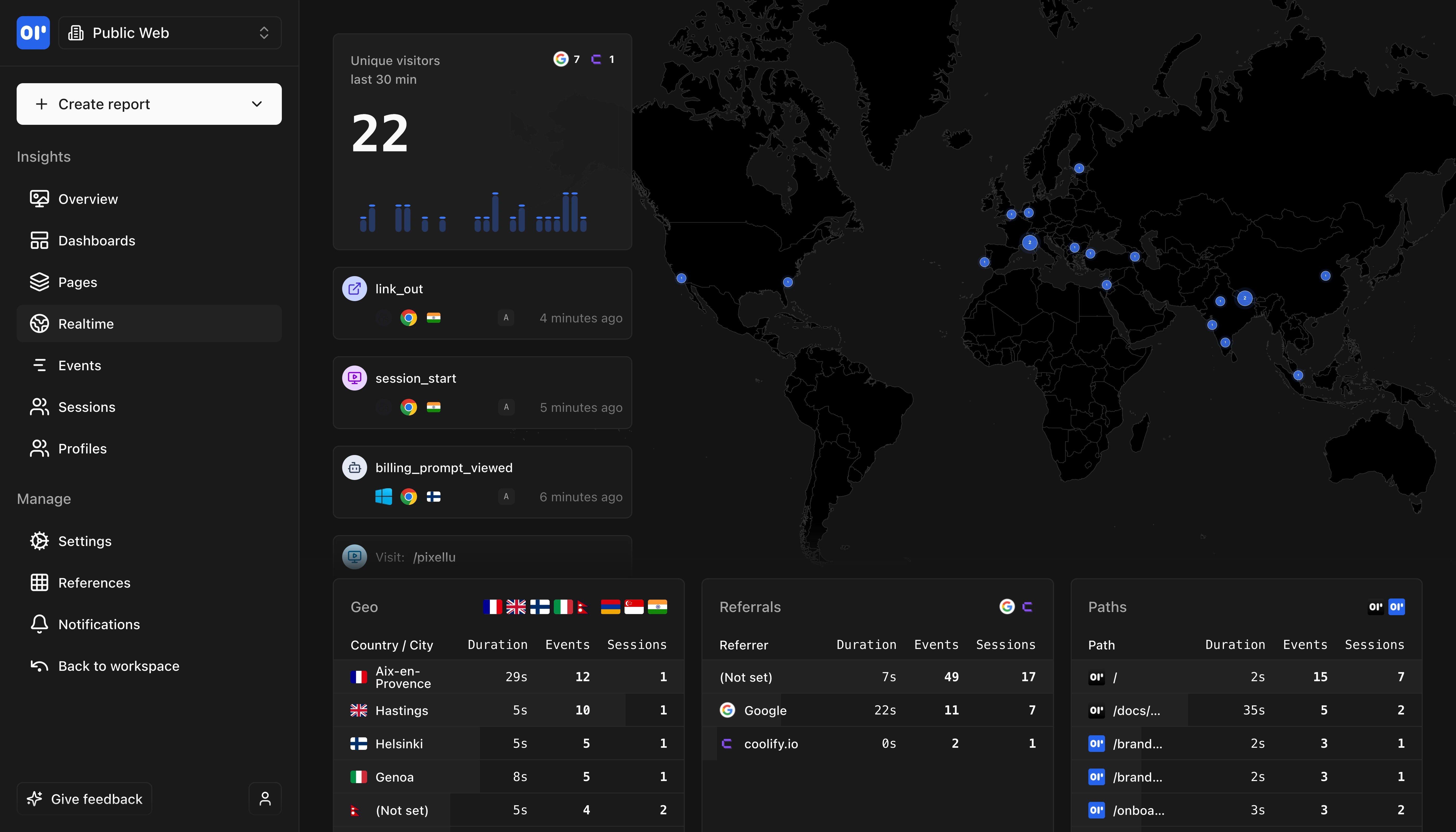
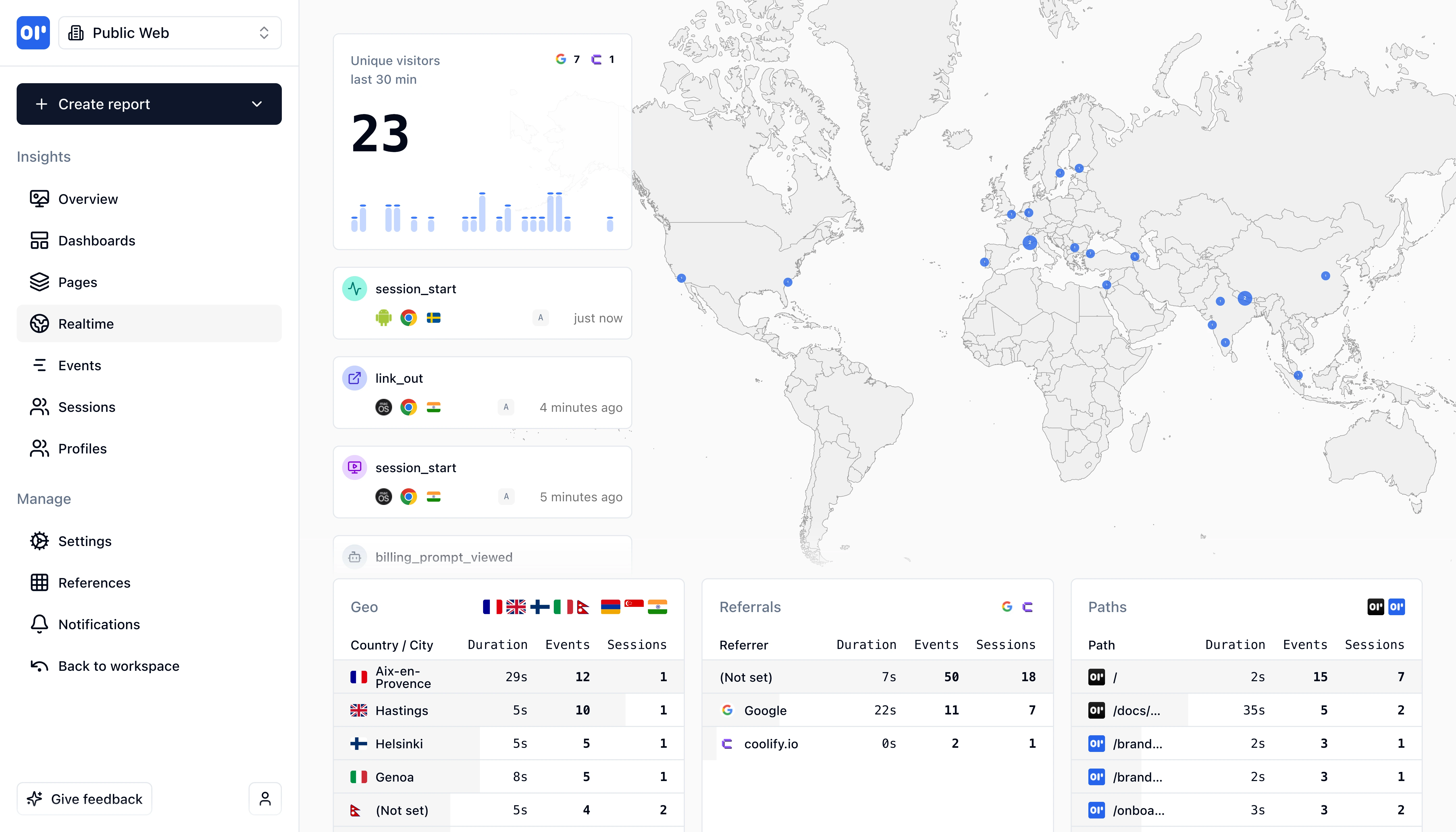
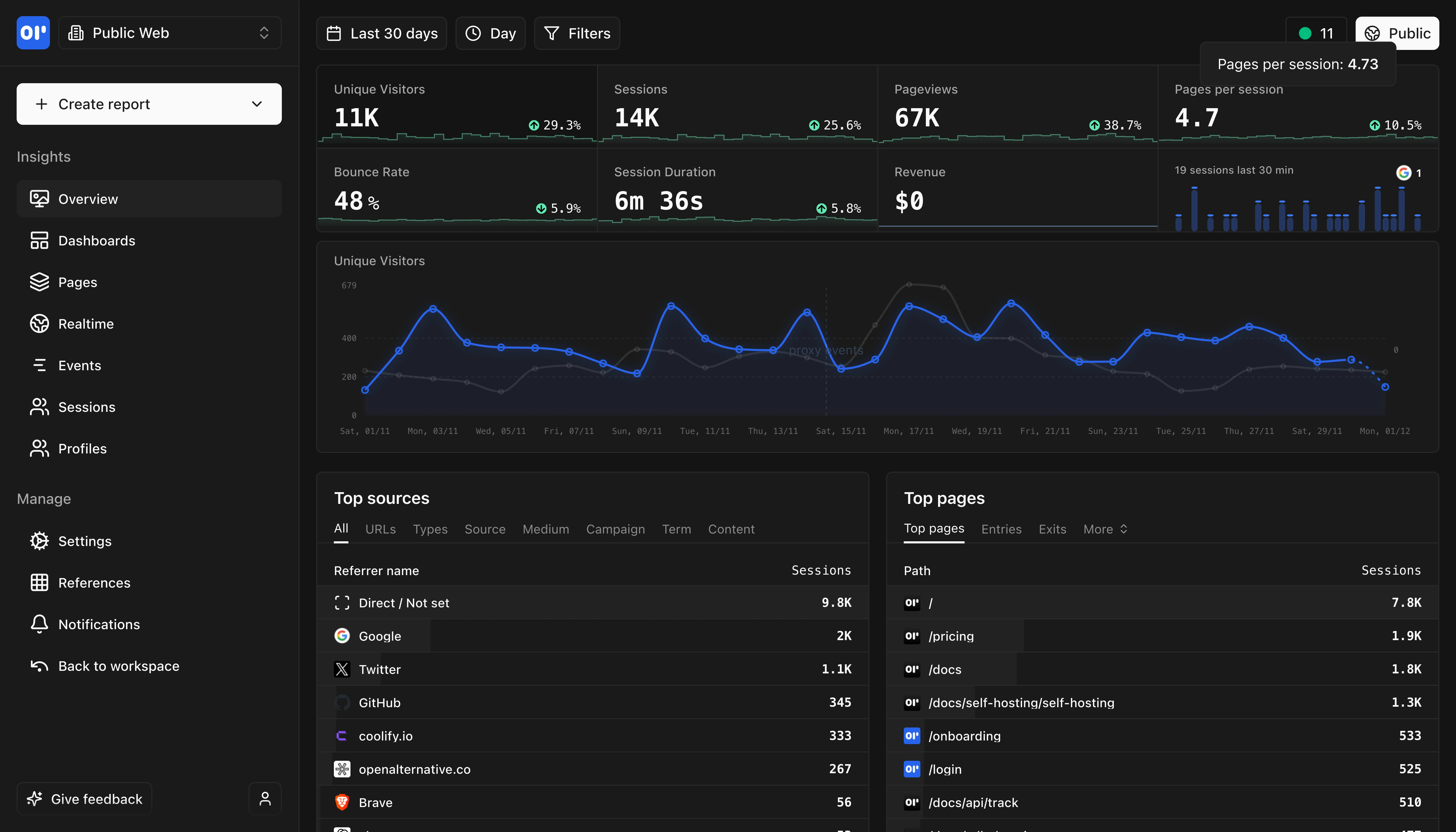
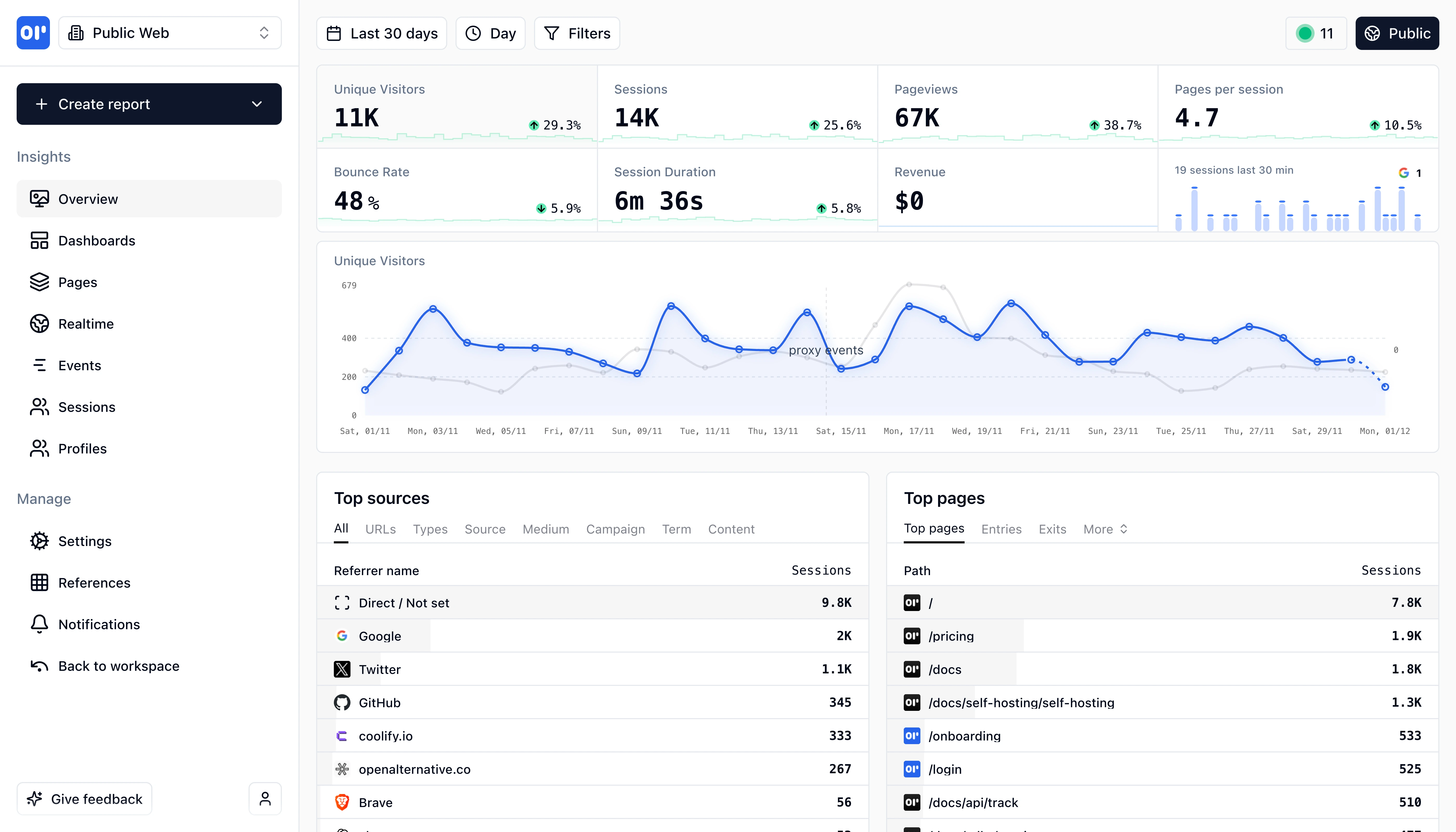
Helion Dashboard Overview
This is our web analytics dashboard, its an out-of-the-box experience so you can start understanding your traffic and engagement right away.

Why consider Helion over Ackee?

Ackee is an ultra-minimal, self-hosted analytics tool that prioritizes anonymous tracking and a clean interface. Built on MongoDB, it's a solid choice for developers who want basic web metrics on their own server without any third-party data sharing. But its intentional minimalism means no user identification, no product analytics, and no cloud-hosted option.

Helion provides everything Ackee offers — privacy-focused, open-source, and self-hostable — while adding the product analytics capabilities that help you actually grow your product. Funnels let you understand where users drop off, retention analysis shows whether they come back, and user identification connects anonymous visits to real accounts once users sign in.

The database architecture is a fundamental difference. Ackee uses MongoDB, which works for small sites but isn't designed for analytical queries. Helion uses ClickHouse, a column-oriented database purpose-built for analytics, which means fast queries even with millions of events. And if you don't want to manage servers, Helion offers a managed cloud (30-day trial, then from $2.50/mo) — something Ackee doesn't provide.

If you appreciate Ackee's self-hosted simplicity but need mobile app analytics through native SDKs, deeper insights into user behavior, or the option to use a managed cloud service, Helion is the natural upgrade path. Self-hosting stays just as simple: a one-command `./setup` wizard walks you through configuration and brings the whole Docker Compose stack up in minutes.
Helion vs Ackee: Which is right for you?

Both are privacy-focused open source analytics tools. Ackee focuses on simple web metrics with anonymous tracking. Helion adds product analytics capabilities with user identification.

Choose Helion if...

1

Teams needing product analytics (funnels, retention, cohorts)

2

Apps requiring user identification and tracking

3

Projects that need to scale with ClickHouse architecture

Choose Ackee if...

1

Personal blogs and small sites wanting simple stats

2

Privacy maximalists who want zero user identification

3

Developers comfortable with GraphQL API customization

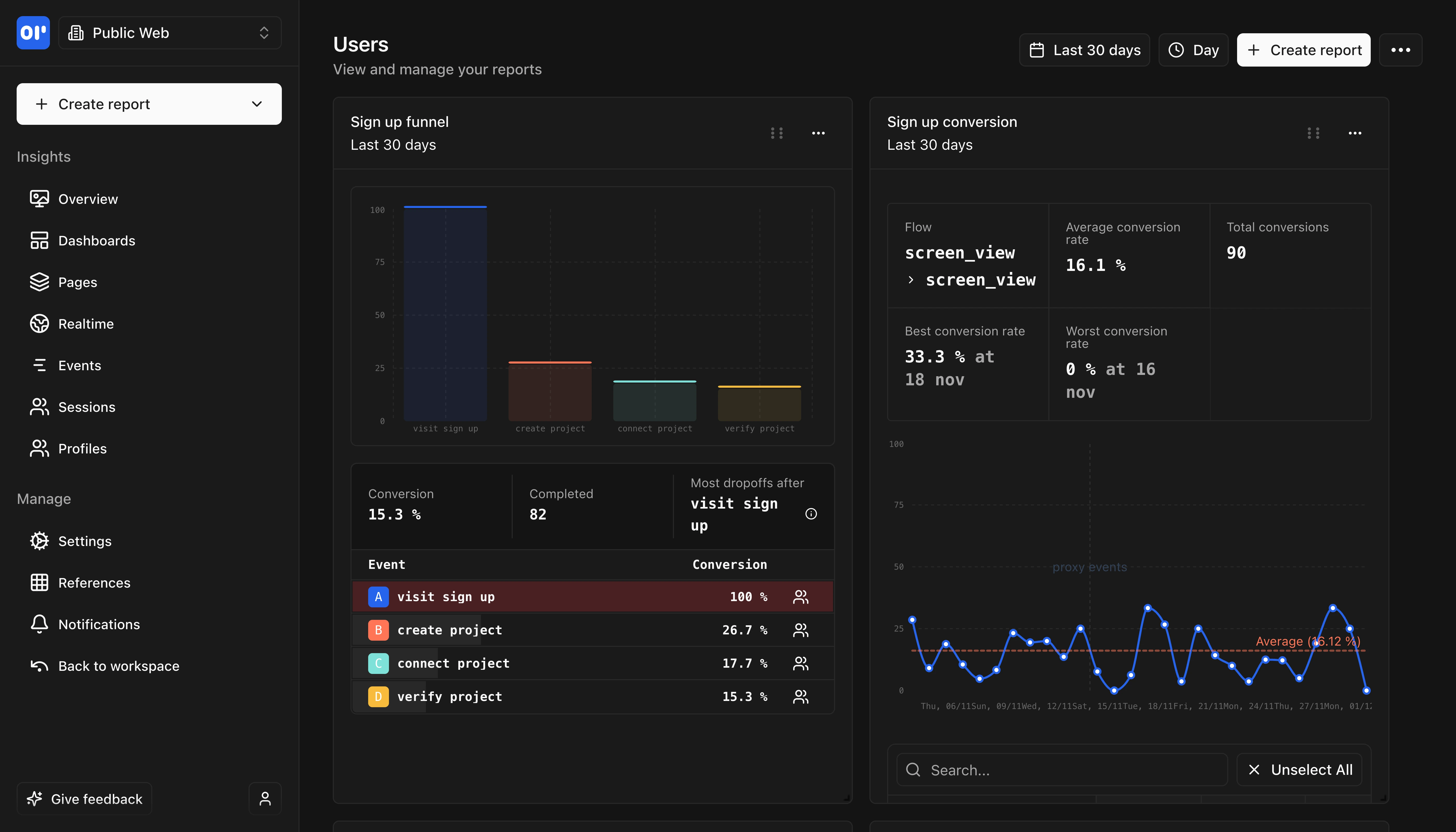
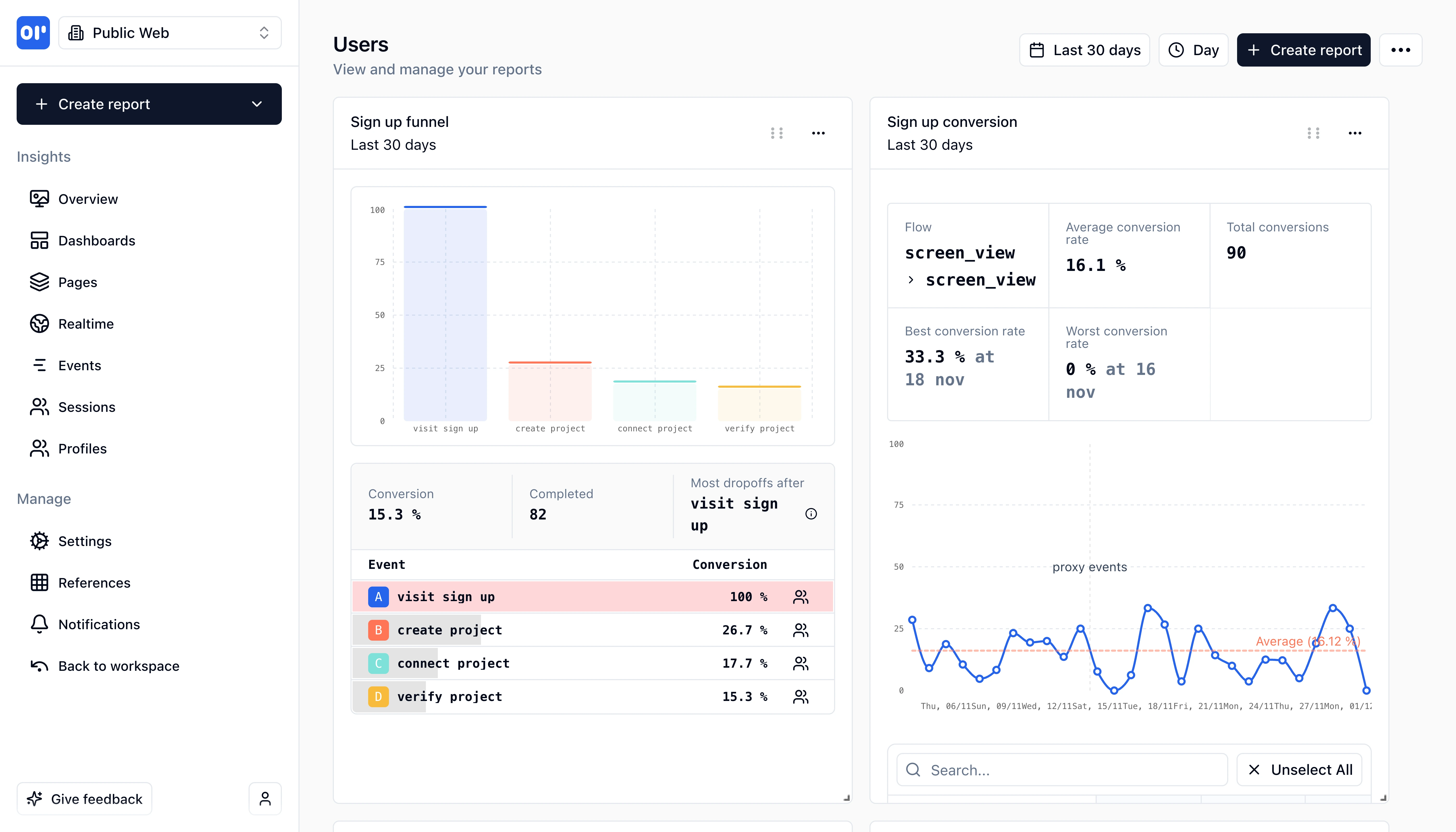
Helion Dashboard
Comprehensive analytics dashboard with real-time insights and customizable views.

Key differences at a glance

Here's how Helion and Ackee compare on the factors that matter most.

FeatureHelionAckee
Analytics Depth
Web + Product Analytics
Web Analytics Only
User Identification
Yes - Track individual users
No - Anonymous aggregate only
Database Architecture
ClickHouse (optimized for analytics)
MongoDB (general purpose)
Deployment Options
Cloud + Self-hosted
Self-hosted only
Open Source
Yes (AGPL-3.0)
Yes (MIT License)
Page Views
Referrers
Visit Duration
Ackee tracks duration by updating records constantly
Device & Browser
Ackee requires 'detailed' mode for full device info
Screen Sizes
Ackee requires 'detailed' mode enabled
Real-Time Dashboard
Ackee shows active visitors in real-time
Custom Event Tracking
Ackee supports custom events with key-value data
Funnel Analysis
Ackee has no funnel visualization or analysis
Retention Analysis
Ackee cannot track returning users by design
User Profiles
Ackee intentionally anonymizes all user data
Cohort Analysis
Ackee's anonymous model doesn't support cohorts
User Path Analysis
Ackee cannot reconstruct user browsing history
A/B Testing
Ackee is analytics-only, no experimentation
GraphQL API
Ackee's entire UI is powered by its GraphQL API
REST API
Helion uses REST; Ackee uses GraphQL only
Email Reports
Neither offers scheduled email reports. Helion sends real-time alerts via Slack, Discord, webhook, and in-app; Ackee has no built-in reporting.
Multiple Domains
Both support unlimited domains from one instance
Ignore Own Visits
Ackee can ignore logged-in dashboard visits
Cookie-Free by Default
Both are cookieless by default
No Consent Banner Required
Both claim no consent needed for basic analytics
GDPR Compliant
Ackee uses daily-rotating salt hashes for anonymization
Data Anonymization
Ackee uses multi-step anonymization with daily salt rotation
Self-Hosted Option
Ackee is self-hosted ONLY; Helion offers both
EU Data Residency
Both can be hosted anywhere; Ackee requires self-hosting
JavaScript SDK
ackee-tracker available via npm or self-served
React Integration
use-ackee React hook available
Vue/Nuxt Integration
nuxt-ackee module available
Gatsby Plugin
gatsby-plugin-ackee-tracker available
Native iOS SDK
Ackee is web-focused only
Native Android SDK
Ackee has no official mobile SDKs
WordPress Plugin
Soapberry plugin available for WordPress
Flutter/Dart SDK
Helion has a community Flutter SDK; Ackee has the ackee_dart community package

Feature comparison

Both are open source and privacy-focused, but with different capabilities and depth.

Page Views

Referrers

Visit Duration

Device & Browser

Screen Sizes

Real-Time Dashboard

Custom Event Tracking

Funnel Analysis

Helion Real-time Analytics
Track events in real-time as they happen with instant updates and live monitoring.

Technical comparison

For developers evaluating analytics tools, here's how the implementations compare.

FeatureHelionAckee
SDK Size2.3 KB (gzipped)
~6 KB (gzipped), served from your Ackee instance
Platforms
  • JavaScript/TypeScript
  • React
  • Next.js
  • Vue
  • React Native
  • Flutter
  • iOS
  • Android
  • Node.js
  • Python
  • Ruby
  • Java
  • Rust
  • PHP
  • JavaScript (browser)
  • React (use-ackee)
  • Nuxt.js
  • Vue
  • Gatsby
  • Svelte
  • Angular
  • WordPress
  • Dart/Flutter
Open SourceYes - AGPL-3.0
Yes - MIT LicenseHelion is AGPL-3.0; Ackee is MIT. Both are fully open source.
Self HostingDocker Compose (ClickHouse + Postgres + Redis), guided setup wizard
Docker with MongoDB required, or deploy to Vercel/Netlify/Heroku with MongoDB Atlas
DatabaseClickHouse (columnar, analytics-optimized)
MongoDB (document database)
Data RetentionUnlimited (self-hosted), configurable (cloud)
Unlimited (depends on your MongoDB storage)
LanguageTypeScript/Node.js
Node.js
APIREST API
GraphQL API

Pricing comparison

Both offer free self-hosting. Helion also offers managed cloud options.

Helion

Event-based, transparent

Transparent pricing from $2.50/month for 5,000 events, with a 30-day free trial.

Self-host free with unlimited events.

All features included at every tier.

Free tier:Self-hosting (unlimited events)
Free trial:30 days

Ackee

100% Free (self-hosted only)

Completely free - no paid tiers exist.

You pay only for your own infrastructure (MongoDB and server hosting).

MongoDB Atlas free tier (512MB) works for small sites.

Free tier:Self-hosted: Free forever, no paid option

Migrating from Ackee to Helion

Switching from Ackee to Helion is straightforward. Both are lightweight with similar integration approaches.

Difficulty:easy
Estimated time:30 minutes to 2 hours
1

Install Helion SDK

Add the Helion SDK to your application. Replace the ackee-tracker script with Helion's lightweight tracking code.

2

Map Events to Helion

Ackee events translate to Helion events. Replace instance.action() calls with op.track() - the structure is similar.

3

Add User Identification (New)

Unlike Ackee, Helion can identify users. Add op.identify() calls to unlock retention, cohorts, and user profiles - a major upgrade from Ackee's anonymous-only model.

4

Configure Dashboards

Set up your Helion dashboards. You'll now have access to funnels, retention charts, and cohort analysis that weren't possible in Ackee.

5

Remove Ackee

Once verified, remove the Ackee tracker script and optionally decommission your Ackee server and MongoDB instance.

SDK Compatibility

Both use simple event tracking APIs. Ackee's instance.action() becomes Helion's op.track().

Historical Data Import

Ackee intentionally anonymizes data, making historical import challenging. Most teams start fresh with Helion.

Where Helion is a better fit than Ackee

Choose Helion when you need more than simple web stats - funnels, retention, user identification, and scalability.

Scaling Beyond MongoDB

Ackee uses MongoDB which works for small sites but isn't optimized for analytical queries at scale. Helion's ClickHouse backend is purpose-built for analytics workloads.

Teams Needing Product Analytics

Ackee provides basic web metrics. If you need funnels, retention analysis, cohort breakdowns, or user journey mapping, Helion adds these capabilities while maintaining privacy.

Wanting a Cloud Option

Ackee is self-hosted only with no managed cloud option. If you want analytics without managing servers, MongoDB, and backups, Helion offers a managed cloud with a 30-day free trial (then from $2.50/mo).

Apps Requiring User Identification

Ackee intentionally cannot identify users or track returning visitors. If you need to understand individual user behavior or measure retention, Helion provides these features.

Mobile App Analytics

Ackee is designed for websites with no official mobile SDKs. Helion offers native SDKs for iOS, Android, and React Native with full product analytics capabilities.

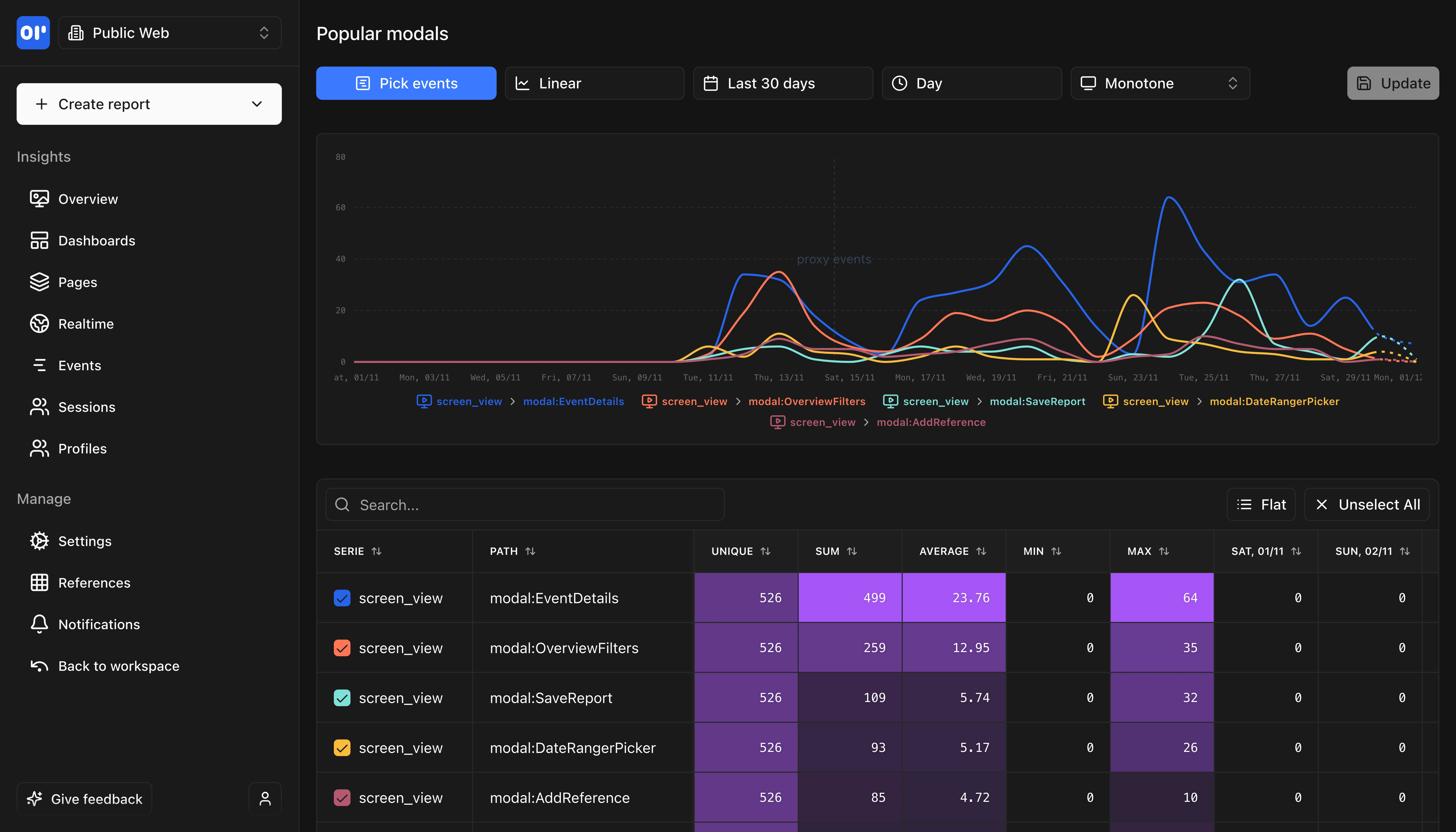
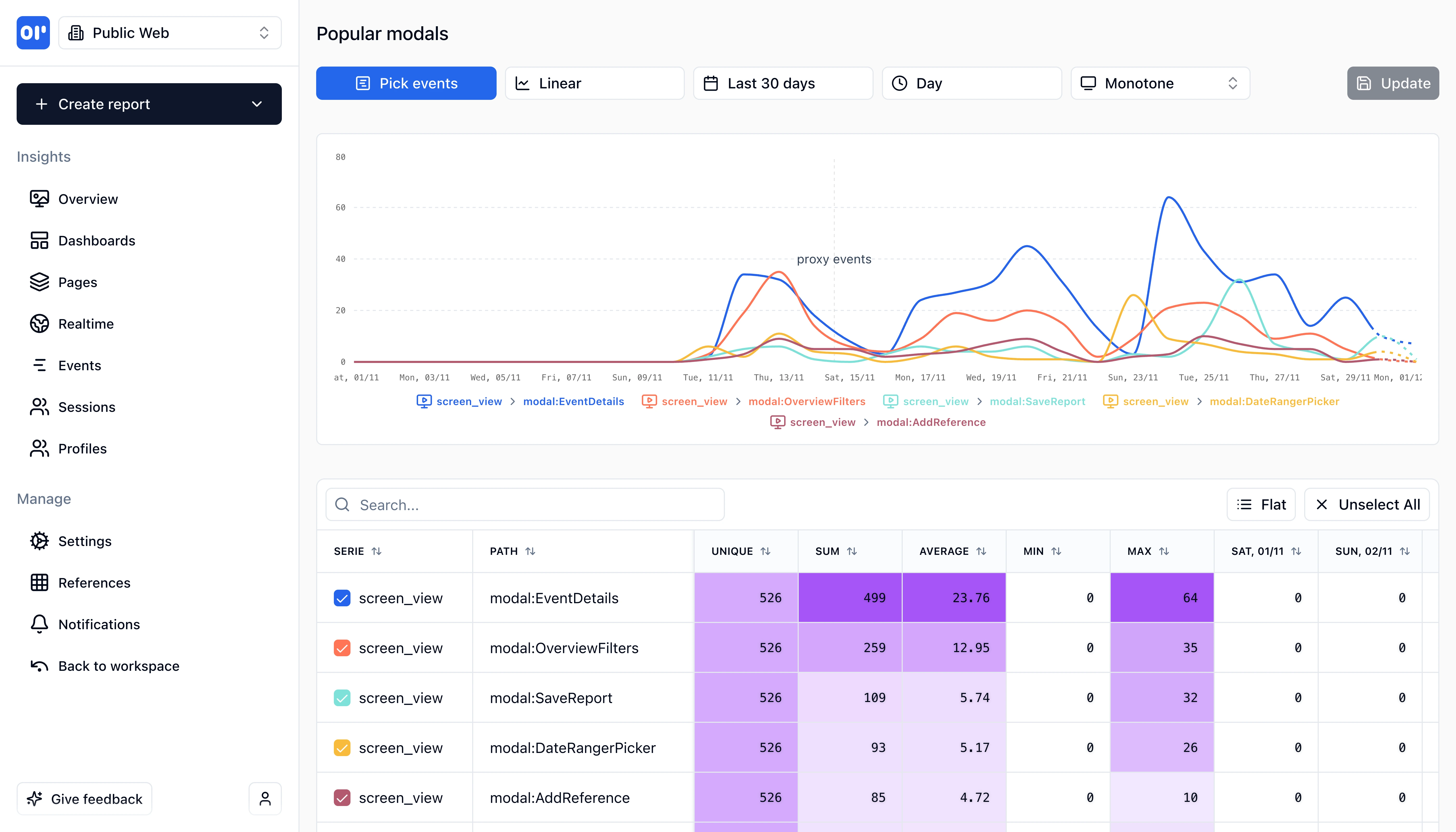
Helion Reports
Generate detailed reports and insights with customizable metrics and visualizations.

Frequently asked questions

Common questions about switching from Ackee to Helion.

Related resources

Explore more comparisons and guides to help you choose the right analytics tool.

Ready to make the switch?

Test Helion free for 30 days, you'll not be charged anything unless you upgrade to a paid plan.